Description
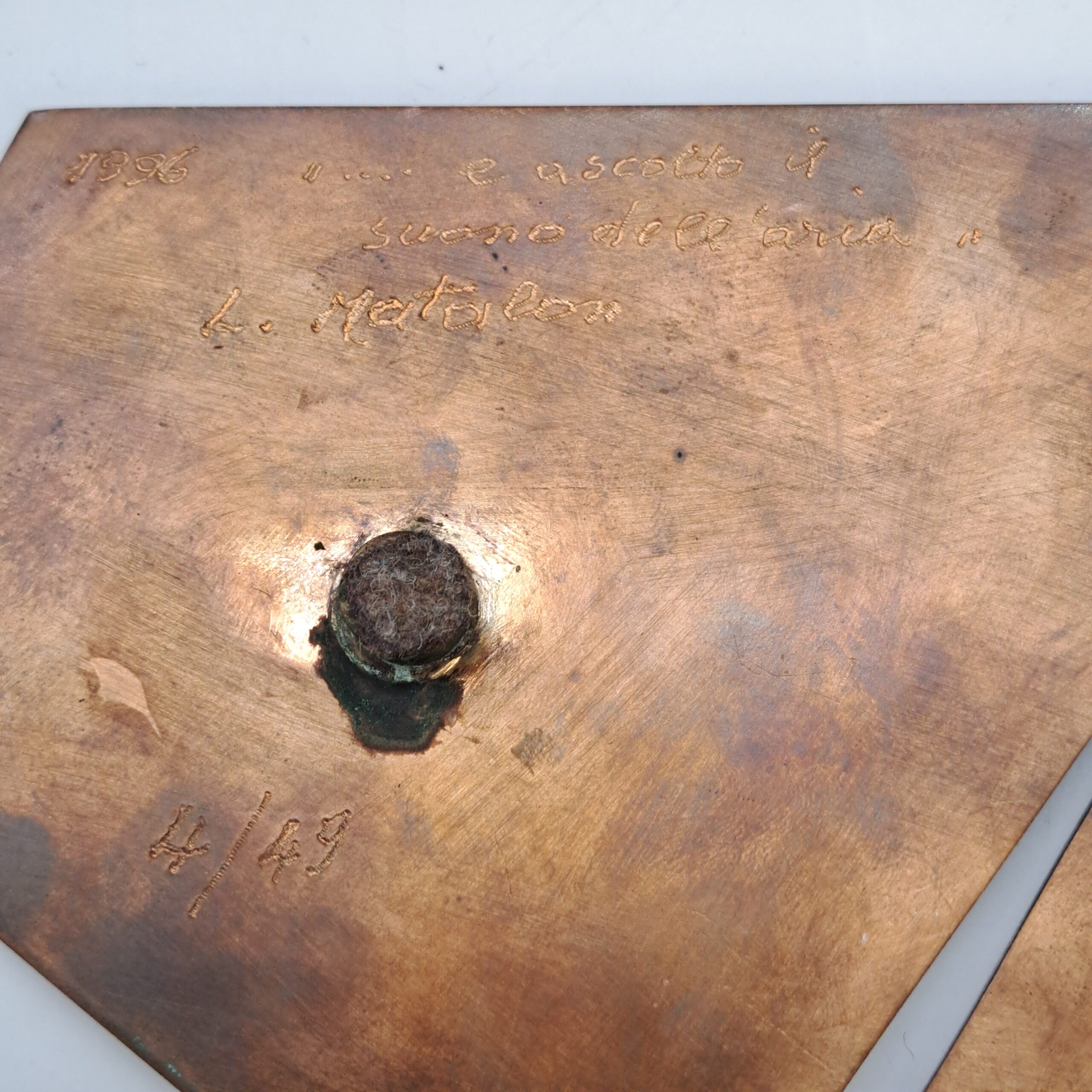
For a lot of information on life and work of Luciana Matalon, see www.fondazionematalon.org, also this text: : Born in Asolo on December 21, 1934, Luciana Matalon moved to Milan at an early age, where she began her education at the Brera Academy of Fine Arts. Her career, characterized by a continuous exploration of the human condition and the cosmos, is an intellectual and creative journey in which painting, sculpture, and jewelry become expressive mediums for an endless search.
Starting in 1962, Matalon began exhibiting her works in national and international exhibitions, quickly drawing the attention of critics. Her early works, influenced by Fontana and Burri, are characterized by rough canvases, wrapped in threads of fibers and resins that conceal red solar discs, ancestral symbols of energy and life. From these works emerges a sense of anguish regarding the smallness of man in the face of the cosmos, but also the desire to transcend the boundaries of matter. Iconic of this phase are her “Cathedrals,” dreamlike and reflective images that point toward the transcendent, culminating in The Last Cathedral, an emblem of the tension toward infinity.
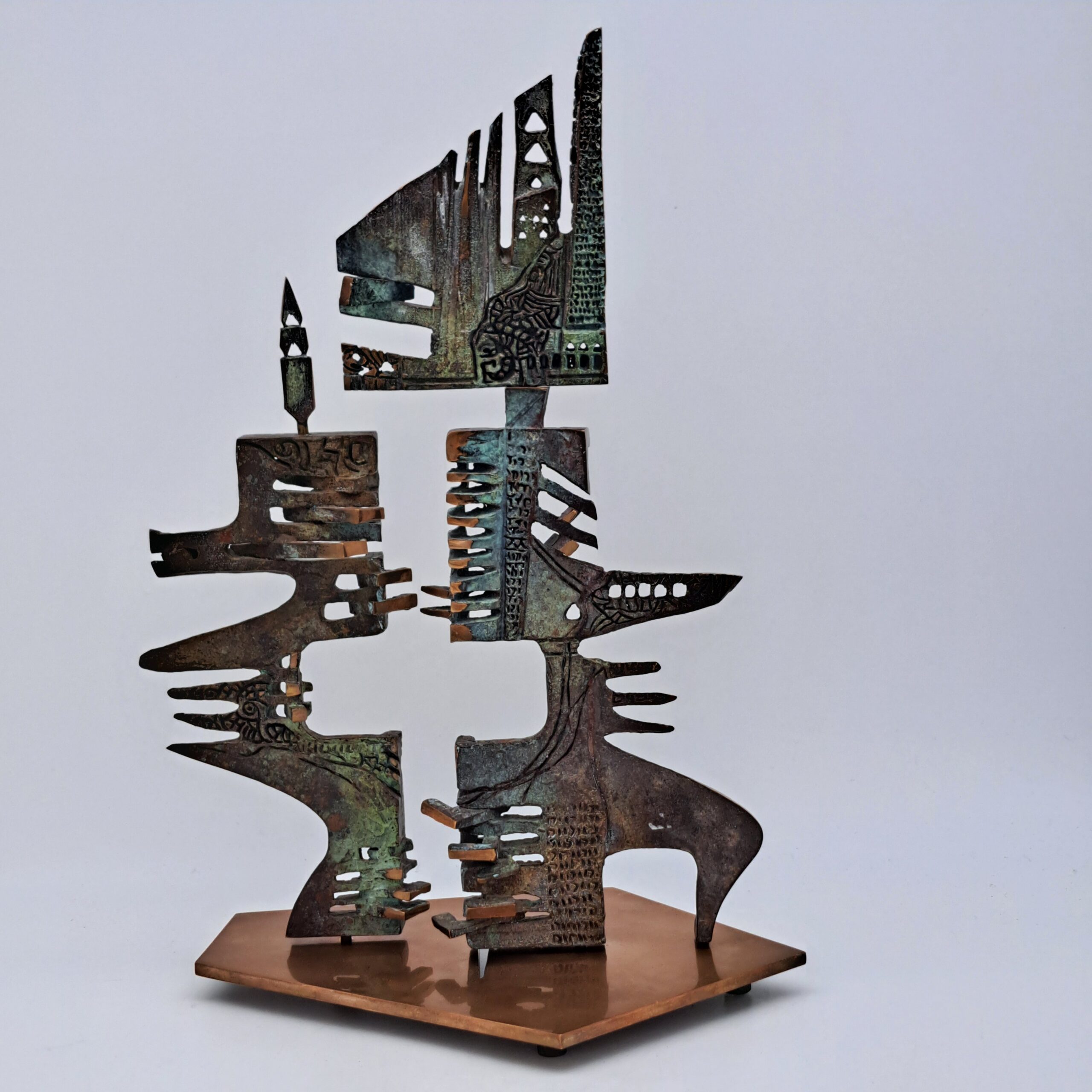
The 1970s marked a turning point for Matalon, with a growing focus on sculpture, which began to dominate her artistic journey. During this period, the artist explored a return to the figurative, filling her works with symbolic and scriptural elements. Her sculpture became a bearer of complex messages, where organic forms and negative spaces merged, evoking a tension toward transcendence and symbolism. Through the use of both empty and full spaces, Matalon constructed a visual narrative that went beyond mere materiality, seeking to transcend the concrete and reach a symbolic and universal level.
In the 1980s, Matalon created cycles such as Dagli scavi della memoria (From the Excavations of Memory) and Archeologia della psiche (Archaeology of the Mind), where writing became the protagonist, replacing filigree patterns with dense psychic scripts (intensely intertwined visual signs arranged to create a significant optical impact, similar to a symbolic code or alphabet). Her works evoke ancient writings, from Sumerian to Hebrew, transforming the canvas into both an intimate and universal diary. In this context, the artist constructs a narrative in which time and memory overlap, raising questions about the origin and destiny of humanity.