Description
Arnold (Nol) Bueno de Mesquita found his career in the furniture industry in Amsterdam. He started an “interior design office” at Nieuwe Herengracht 123. During the war, which he survived as a Jewish Amsterdammer, Nol was active in the Jewish resistance.
After the war, in 1945, Nol Bueno de Mesquita published his report “The Social Function of the Interior Designer After the War.” In it, he argued that popular taste was in a dire state. He envisioned a leading role for designers, manufacturers, distributors, and the government to improve the situation. After discussions with museum director Willem Sandberg and architects Mart Stam and Johan Niegeman, Bueno de Mesquita took the initiative to establish the Distributors Association ‘Goed Wonen’. Its goal was “to promote good living among the broadest possible segments of the population.” A follow-up to this initiative was the establishment of the Goed Wonen Foundation in 1946, which aimed to promote its ideals through information campaigns. The Goed Wonen Foundation aims to improve the living culture for a broad segment of the population and combats “stylelessness, material shortages, and housing shortages.” It promotes “responsible” furniture and “good” home furnishings. The Goed Wonen Foundation later merged with the Netherlands Architecture Institute (NAI) through the Stichting Wonen Foundation. A key voice for Goed Wonen is the eponymous magazine published by the foundation. Nol Bueno de Mesquita was one of the editors. Goed Wonen’s furniture aesthetics and design principles can be seen as a continuation and elaboration of the ideas of functionalist architects, as reflected in magazines like De 8 and Opbouw (1932-1943). Nol, however, recognized that not all Dutch people, but especially the well-educated middle-class and teachers, embraced the sober modern home furnishings of the 1950s. Gradually, the emphasis shifted to everything related to living in a broader context. With the PIRU furniture system of modular cabinets he developed in the late 1940s, Nol is considered a forerunner of later successful manufacturers like PASTOE and IKEA. Nol Bueno de Mesquita’s business provided the canon of modern design of the time: modern furniture by Gispen, Van Os, and Pastoe, and fabrics by De Ploeg. He also designed new products, including a furniture system for Pastoe, and designed interiors for large residential buildings, hotels, canteens, and executive offices, with clients such as Hoogovens, KLM, and the hospitality empire of Maup Caransa. He was the interior designer for the opening of the Caransa Hotel in 1969. In 1988, he published “Portugusade,” a memoir of the Amsterdam of the Portuguese Jews, with Karel Junger. In 1996, also with Junger, he published “Inner Fun of an Interior Designer.” His archive is housed at the Foundation for Bibliographies and Oeuvre Lists of Dutch Architects and Urban Planners (BONAS).
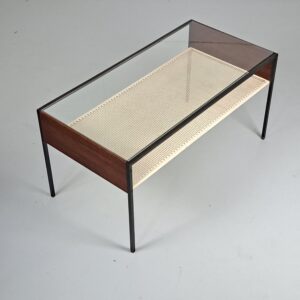
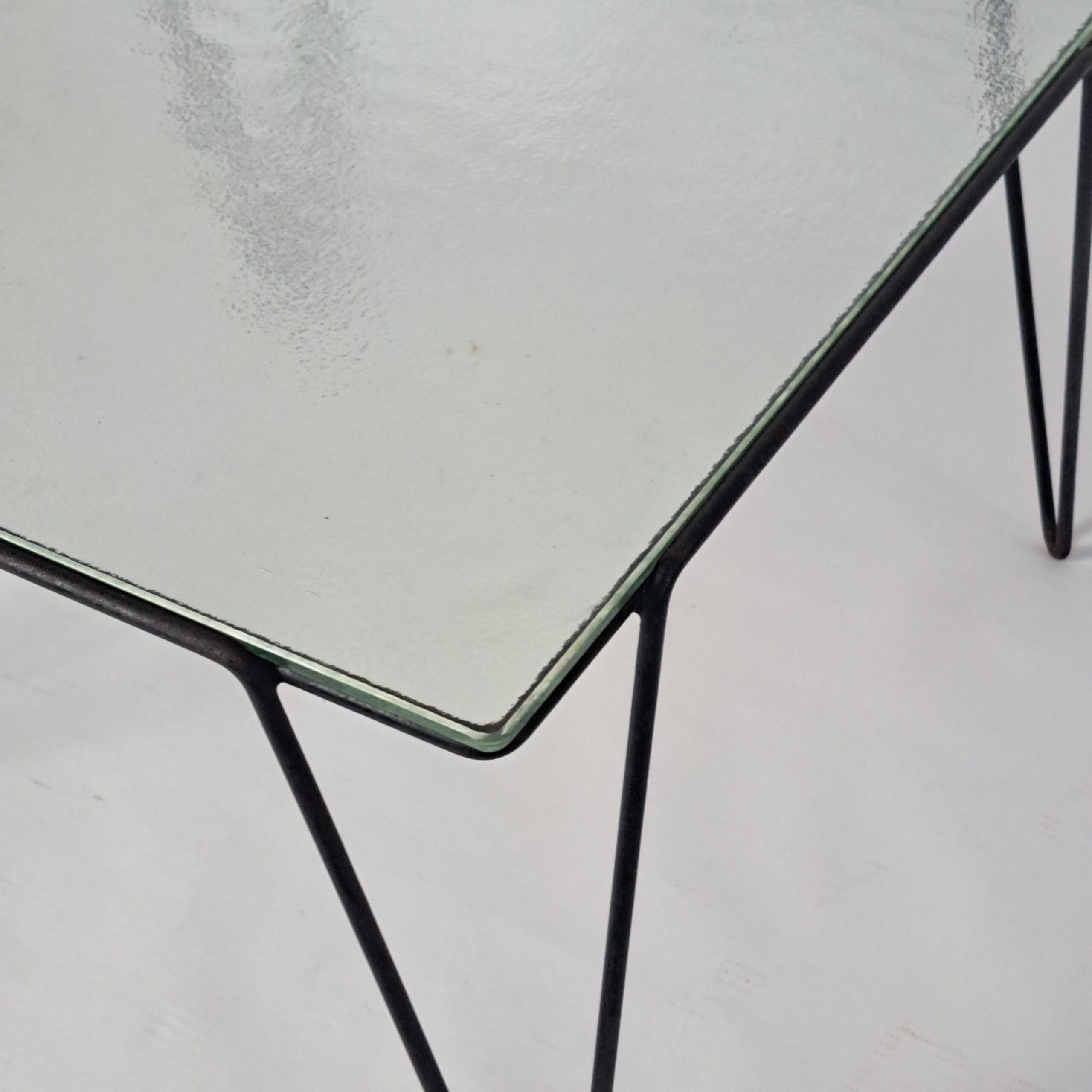
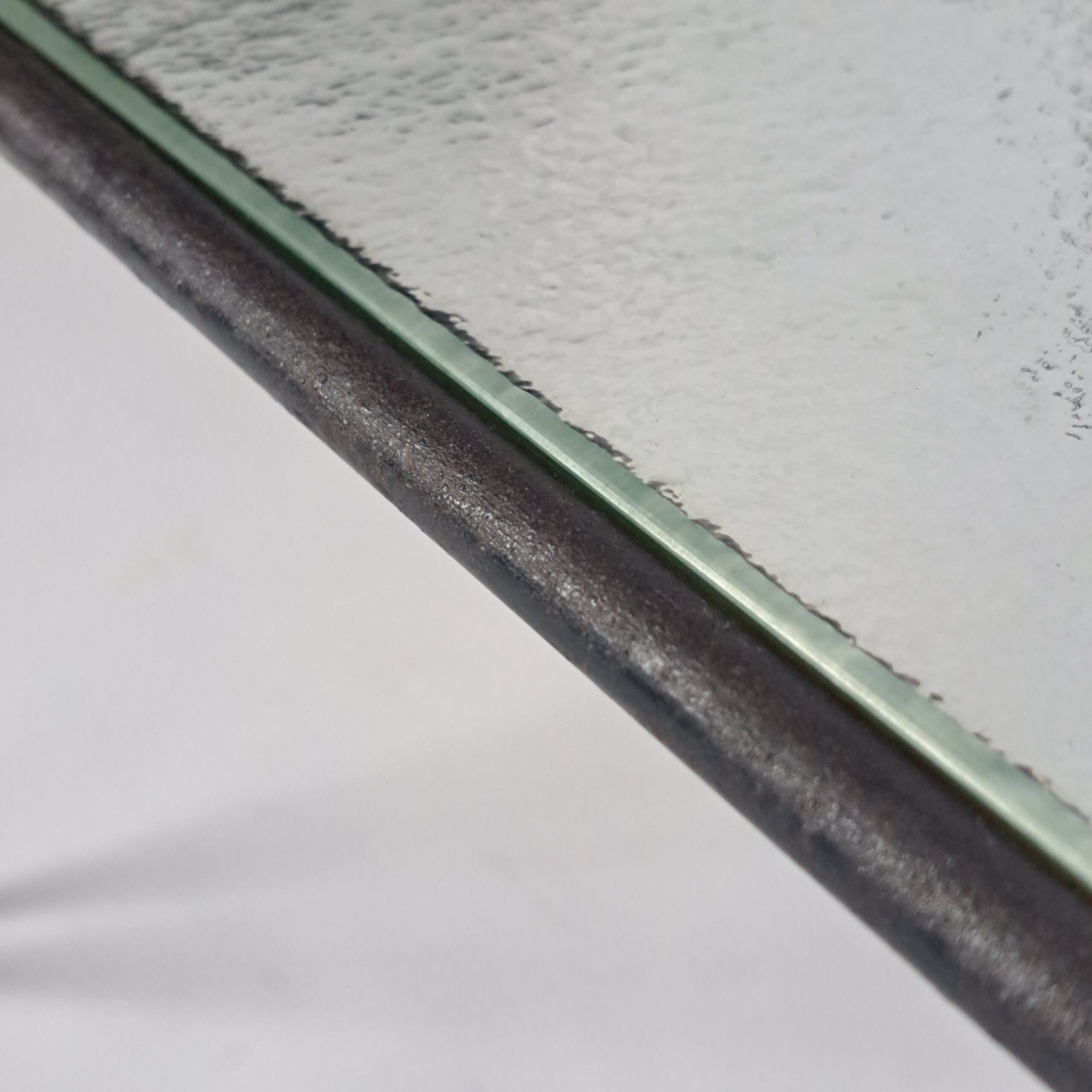
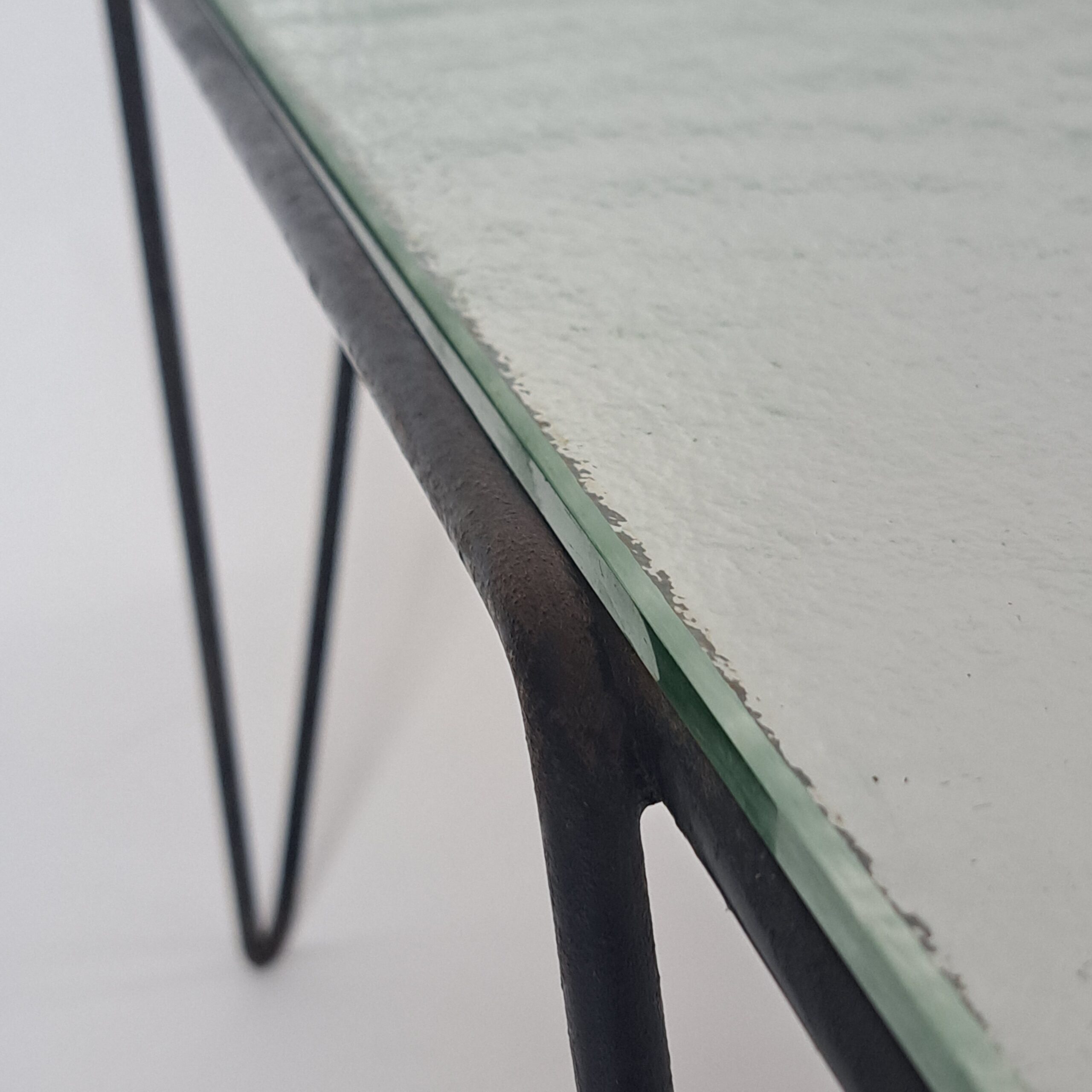
This coffeetable in glass and metal is a very good exemple of the esthetics of Bueno de Mesquita and Goed Wonen. Severe minimalism in Dutch design in the 1950s, though very elegant. The table is in good condition, the glass is in mint condition and the metal is slightly corroded, but easy to spray over. H. 44, 65×65.