


Description
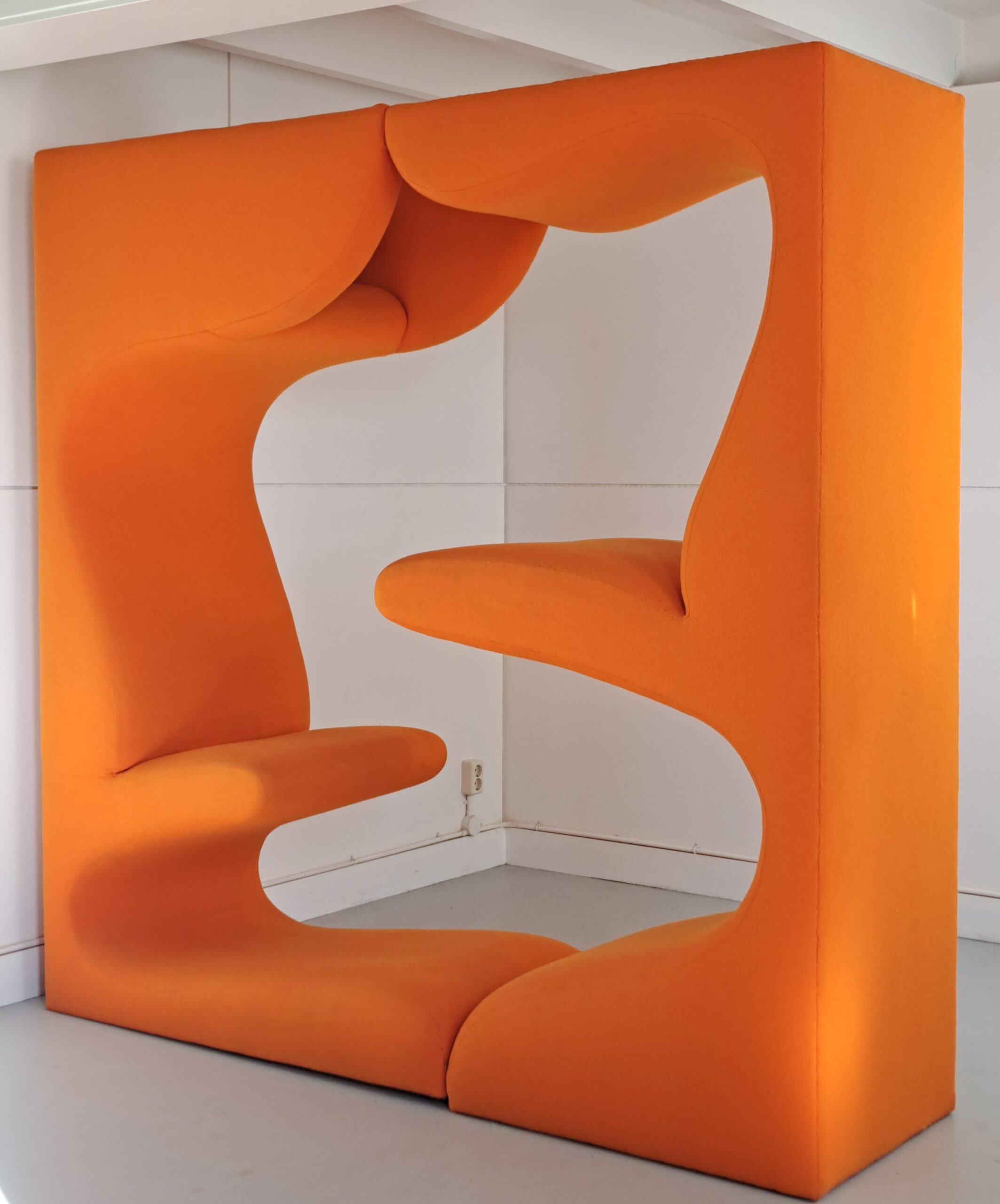
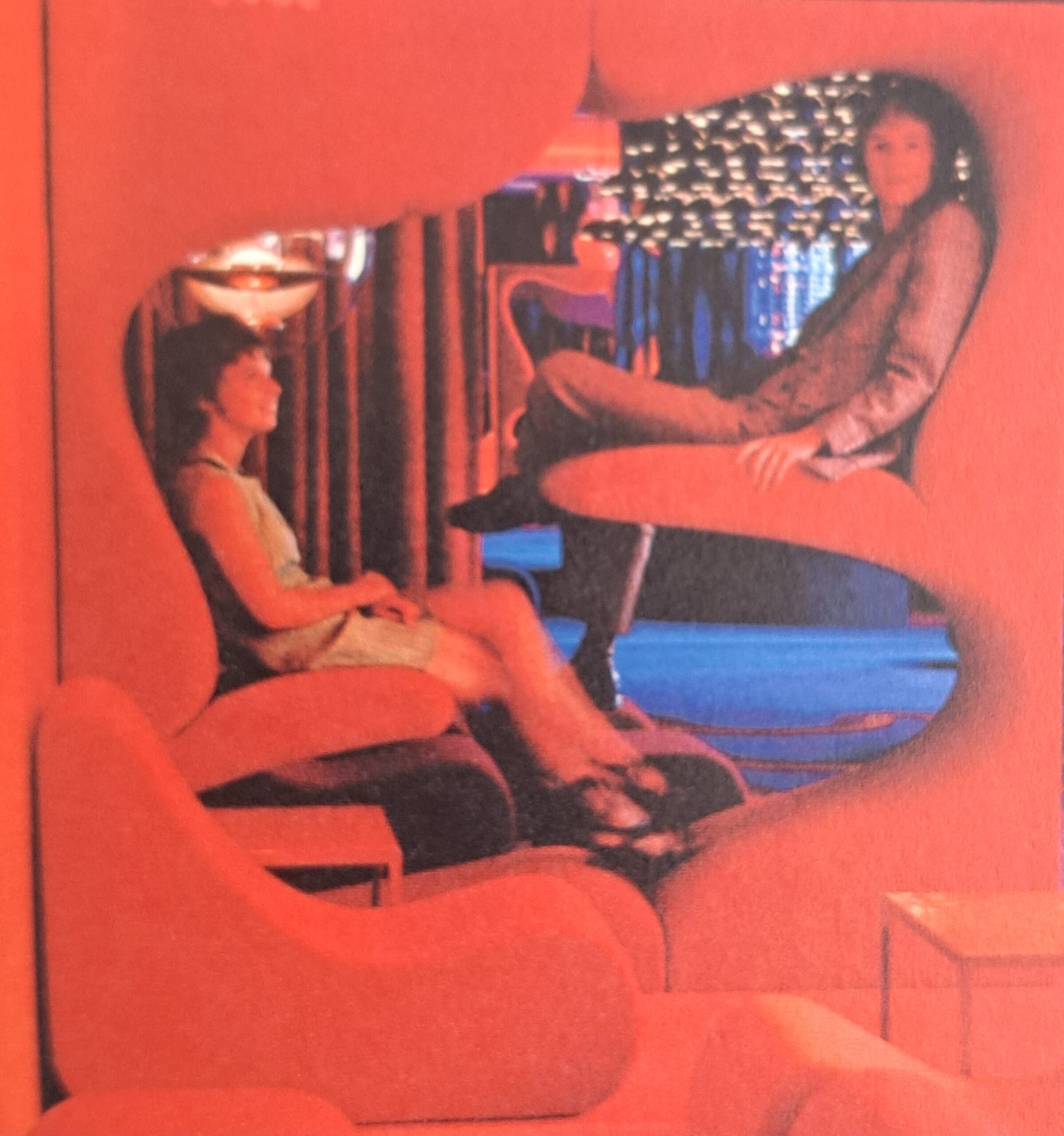
The Living Tower (1968–1969) by Verner Panton is one of the most radical furniture designs of the mid 20th century. It is not just a chair or sofa but a spatial sculpture for living, reflecting the experimental design culture of the 1960s. Instead of a single fixed posture, the design encourages multiple body positions: sitting, leaning, lying, or climbing between levels. Another notable aspect is its social configuration: the seating niches face one another, encouraging conversation and interaction among users. In spatial terms, Panton designed the object almost like micro-architecture, turning furniture into a three-dimensional environment rather than a flat object.
The piece also belongs to a broader 1960s design idea called the “domestic landscape.” Instead of arranging separate chairs and tables, designers imagined rooms as continuous environments where people could lounge, climb, and interact freely.
Panton pushed this idea further by designing:
-
furniture as topography
-
seating as spatial exploration
-
interiors as immersive environments
This approach aligns with his immersive installations such as the experimental interiors created for the Visiona exhibitions.
The design went through several manufacturers:
-
1969–1970: Herman Miller / Vitra
-
1970–1975: Fritz Hansen
-
1997: Stega Polstermöbel
-
Since 1999: again produced by Vitra
It remains in production today as a design classic.
The Living Tower we offer is acquired by the previous owner in the beginning of the 21st century, already in a vintage condition. So in our view it is not the re-edition of Vitra, but the earlier 1970s edition. Also the measures differ from the modern Vitra-edition. There is no label on the Living Tower, so its is difficult to prove decisively our view on this design icon. In good condition, the lower left element and the middle left element could have some new filling; on the lower right element a faded dark spot; on the side two very small holes and a minor repair to the stitchwork (see photo’s); h. 201, d. 61, l. 201.


